Did Neanderthals have an incest taboo? The question sounds almost too modern to ask of a species that vanished 40,000 years ago — but the answer, drawn from recent studies of Ice Age DNA, is more interesting than you might expect. Neanderthals lived in communities so small that inbreeding should have been inevitable. Bands of ten to twenty individuals, isolated across vast Ice Age landscapes, had very few possible partners. And yet the genetic evidence shows, clearly and consistently, that close-relative mating was rare. Some mechanism — whether a conscious rule, an instinctive aversion, or a social custom we would not recognise — was keeping Neanderthal families from collapsing into genetic disaster. This post examines what ancient DNA can tell us about Neanderthal incest avoidance, how we know it was happening, and what it reveals about the social intelligence of our extinct cousins.
Why Was Inbreeding a Real Risk for Neanderthals?
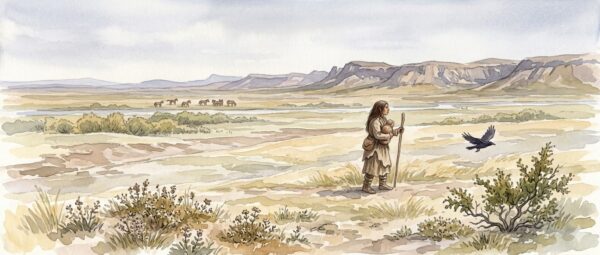
Because their communities were tiny. Genetic studies of Neanderthal remains from across their range point to band sizes of roughly ten to twenty individuals. In a group that small, the number of available unrelated partners at any given moment was often only two or three. Subtract anyone too young, too old, or too closely related, and the pool could shrink to nothing.
Compare this to the minimum viable populations geneticists calculate for modern endangered species. Many conservation biologists consider five hundred breeding adults the rough threshold for long-term genetic health. Neanderthal communities were operating at a fraction of that — and they did so not for a few generations but for hundreds of thousands of years. By every expectation of population genetics, they should have accumulated lethal levels of inbreeding and disappeared within a few thousand years of any isolation event.
They did not. Neanderthals survived, reproduced, and maintained sophisticated cultural traditions across an enormous span of time and geography. Something in their social structure was preventing the genetic catastrophe that their small numbers would otherwise have guaranteed.
How Can We Detect Inbreeding in Ancient DNA?
Inbreeding leaves a specific, measurable signature in the genome. When two close relatives have a child, that child inherits long stretches of DNA that are identical on both chromosomes — because both copies trace back to the same recent ancestor. Geneticists call these stretches runs of homozygosity, and their length tells a surprisingly detailed story.
Long, numerous stretches point to very close recent mating — parents who were siblings, or a parent and child. Moderate stretches suggest cousin-level relationships. Short, scattered stretches are normal in any population that has been small for a long time but is not practising close incest. The pattern is distinctive enough that researchers can examine a single ancient genome and form a reasonable picture of how its parents were related.
When this analysis is applied to Neanderthal remains, a consistent result emerges. Neanderthal genomes do show elevated homozygosity — their communities were small, and everyone was somewhat related to everyone else over many generations. But the pattern is the signature of long-term small population size, not of recent close-relative mating. Parents and children, or full siblings, do not appear to have been regularly producing offspring together. Something was steering mating away from the closest relationships.
How Did Neanderthals Actually Avoid Inbreeding?
By moving women between communities. This is the single most important finding from recent Neanderthal genetics, and it shows up across multiple sites and time periods. When researchers compare the diversity of mitochondrial DNA — inherited only from mothers — with the diversity of Y-chromosome DNA — inherited only from fathers — they find a striking asymmetry. Mitochondrial diversity is high. Y-chromosome diversity is low.
The interpretation is straightforward. Males in a Neanderthal community were typically related to each other through the paternal line. Females, in contrast, came from a variety of different maternal lineages. The only pattern of behaviour that produces this signature across generations is one where females leave their birth communities and join neighbouring groups when they reach reproductive age, while males stay where they were born.
This pattern — which anthropologists call female exogamy — is the functional equivalent of an incest-avoidance system. A young woman born into a tiny band might have no suitable partners among the males she grew up with, because they were her brothers, cousins, uncles, and father. Joining a different community, where the men were unrelated to her, solved the problem. Over hundreds of thousands of years, this movement of women between groups maintained the genetic diversity that kept Neanderthal populations from collapsing into the inbreeding their small numbers would otherwise have caused.
Was It a Taboo, or Just Biology?
The honest answer is that we do not know — and may never know. The genetic data shows the outcome. It cannot directly reveal the mechanism. Several possibilities exist, and they are not mutually exclusive.
The first is a conscious cultural rule — a genuine taboo, understood and enforced by the community. Modern human societies almost universally prohibit close-relative mating, often with explicit social rules about who may or may not partner with whom. Whether Neanderthals had articulated rules of this kind is beyond what genetics alone can tell us, but their capacity for complex communication — documented through hyoid bone anatomy, hearing sensitivity, and the transmission of sophisticated tool traditions — suggests they had the cognitive apparatus such rules would require.
The second possibility is instinctive aversion. Anthropologists have long observed something called the Westermarck effect: children raised in close daily proximity during early childhood tend to develop sexual disinterest in each other as adults, regardless of whether they are biologically related. This is thought to be an evolved psychological mechanism that uses early co-residence as a rough proxy for kinship. If Neanderthals experienced something similar, much of their incest avoidance would have happened automatically, without anyone needing to articulate a rule.
The third possibility is that female exogamy itself — women moving between communities at reproductive age — produced the outcome without requiring either a conscious taboo or an instinctive aversion. If the social custom was simply that young women left to find partners elsewhere, close-relative mating would become rare as a matter of logistics, not principle.
The most likely answer is some combination of all three. Whatever the internal experience of Neanderthal individuals, the external pattern is unmistakable: their societies were organised in ways that kept close relatives from reproducing together, and they maintained this organisation across a timespan longer than modern humans have existed as a species.
What About the Cases Where Inbreeding Did Happen?
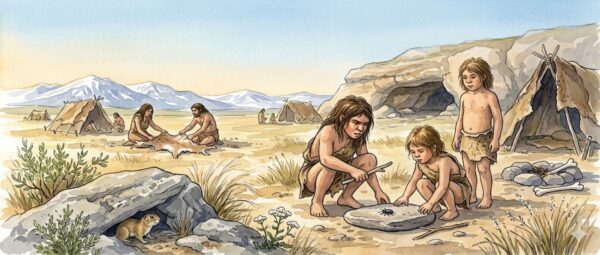
Some Neanderthal remains do show signs of closer inbreeding — and these appear to represent communities in crisis. A small number of individuals from various sites show homozygosity patterns consistent with parents who were close relatives. What these cases typically share is ecological isolation — bands cut off from their neighbours by climate, geography, or population decline, forced to mate within their own dwindling numbers because no alternative was available.
This reinforces rather than contradicts the main finding. When the system of female movement between communities functioned, inbreeding was rare. When that system broke down — when bands became isolated from their neighbours — inbreeding increased, with predictable genetic consequences. The cases of close inbreeding in the Neanderthal record are the exception that proves the rule: avoidance was the default, and it required maintained contact between communities to keep working.
This may also help explain the final chapter of Neanderthal history. As their populations shrank and fragmented during the late Pleistocene, the networks of intergroup contact that had sustained them for hundreds of thousands of years began to fail. Bands became isolated. Inbreeding increased. Genetic health deteriorated. The disappearance of Neanderthals was almost certainly caused by many factors working together, but the collapse of the social network that had kept their small communities genetically viable was likely among them.
What This Means for How We Think About Neanderthals
The old picture of Neanderthals as brutish, instinct-driven creatures sharing caves with whoever happened to be nearby has been steadily dismantled over the past two decades. The incest-avoidance evidence is one more piece of that dismantling. A species that organises its reproductive life around the movement of individuals between communities — and maintains that organisation across hundreds of thousands of years — is doing something cognitively and socially complex. Whether it rises to the level of a conscious rule is perhaps the wrong question. What matters is that the behaviour existed, that it worked, and that it required the kind of sustained intergroup cooperation that used to be considered unique to modern humans.
Lesser-Known Facts About Neanderthal Genetic Health
- Neanderthal communities typically numbered around ten to twenty individuals — far below the thresholds modern conservation biologists use for long-term population viability.
- Despite these small numbers, the pattern of close-relative inbreeding typical of genuinely collapsing populations is absent from most Neanderthal remains studied to date.
- The asymmetry between mitochondrial and Y-chromosome diversity — high in the former, low in the latter — is consistent across multiple Neanderthal sites, suggesting female movement between communities was a long-standing, widespread practice.
- Cases of higher inbreeding in the Neanderthal record tend to cluster in populations that appear to have been ecologically isolated, supporting the view that intergroup contact was the mechanism keeping inbreeding rare.
Myth vs. Evidence: Neanderthals and Inbreeding
Common misconception: Neanderthals, living in small isolated bands, must have been heavily inbred — and this genetic weakness is part of why they went extinct.
The evidence: Most Neanderthal remains show genomic patterns consistent with small populations that were nevertheless actively avoiding close-relative mating, primarily through the regular movement of females between communities. Inbreeding became a serious problem only late in Neanderthal history, when the intergroup networks that had maintained genetic diversity appear to have broken down.
Try This
Think about the unwritten rules in your own family or community about who may partner with whom. Most people do not need to consult a rulebook to know that marrying a sibling is off the table — the idea simply never presents itself. Whether this is because of cultural teaching, instinctive aversion, or the simple fact that you grew up together is usually impossible to separate. Neanderthals almost certainly experienced some version of the same quiet, unexamined steering away from close relatives. The mechanisms may have differed; the outcome was the same.
What We Still Don’t Know
Did Neanderthals have explicit rules governing who could partner with whom, articulated in language and taught across generations? Did the movement of women between communities involve individual choice, family negotiation, or community-level arrangements? Were there Neanderthal concepts of kinship that shaped these decisions? When close-relative mating did occur, was it socially sanctioned, ignored, or actively punished? How did the collapse of intergroup networks feel from inside a Neanderthal community — as a creeping constraint, as a sudden crisis, as something noticed at all? These are questions genetics cannot answer. They may yield, over time, to better archaeological evidence from aggregation sites, seasonal gathering places, and the material traces of intergroup contact — but for now they remain among the most intimate unknowns of Neanderthal life.
Summary: How Neanderthals Avoided Inbreeding
Neanderthal communities were small enough that inbreeding should have destroyed them within a few thousand years of isolation, yet they persisted for hundreds of thousands. The genetic evidence shows they avoided close-relative mating through a system of female movement between communities, creating a pattern where women regularly joined new bands at reproductive age while men remained in their birth groups. Whether this practice was enforced by conscious rule, instinctive aversion, or simple custom cannot be determined from ancient DNA alone, but the outcome is clear: Neanderthal societies were organised in ways that steered reproduction away from the closest relationships. When this system functioned, inbreeding was rare. When it failed — as it appears to have done in the final millennia of Neanderthal history — the consequences were severe. The evidence points to a species capable of sustained, cooperative, multi-generational social arrangements, operating across landscapes and time on a scale that challenges older assumptions about Neanderthal cognitive and social life.
Frequently Asked Questions About Neanderthal Incest Avoidance
Were Neanderthals inbred?
Most Neanderthal remains studied to date show genomic patterns consistent with small but not severely inbred populations. Some isolated communities late in Neanderthal history show higher inbreeding, but the overall pattern is one of active avoidance.
How did Neanderthals avoid inbreeding in such small groups?
Primarily through female exogamy — young women leaving their birth communities to join neighbouring groups at reproductive age. This kept genetic diversity flowing between small bands across the landscape.
Did Neanderthals have an incest taboo?
The genetic evidence shows they were avoiding close-relative mating, but whether this was a conscious cultural rule, an instinctive aversion, or an emergent consequence of female movement between groups cannot be determined from DNA alone.
What is the Westermarck effect and did Neanderthals experience it?
The Westermarck effect is a proposed psychological mechanism in which children raised in close proximity during early childhood develop sexual disinterest in each other as adults. Whether Neanderthals experienced this is unknown, but it is a plausible contributor to their incest-avoidance patterns.
Did inbreeding cause Neanderthal extinction?
Inbreeding likely contributed, particularly in late populations where intergroup networks had broken down, but Neanderthal extinction was caused by many factors working together — including climate change, competition with modern humans, and the fragmentation of the social networks that had maintained genetic health.
For more on Neanderthal pair bonding, family structure, and the question of whether Neanderthals formed lasting partnerships, see Did Neanderthals Marry? Pair Bonding, Jealousy, and Neanderthal Family Life. For a broader look at how Neanderthal bands lived day to day, see After the Hunt Was Over: The Social Life of a Neanderthal Band.
