In 1960, deep inside a cave in the Zagros Mountains of Iraqi Kurdistan, an archaeologist uncovered the skeleton of a Neanderthal man lying on his left side in a partial fetal position. Soil samples taken from around the body were set aside for routine pollen analysis and forgotten for eight years. When a specialist finally examined them, she found something unexpected: dense clumps of pollen from at least seven species of flowering plants — yarrow, cornflower, grape hyacinth, hollyhock, and others. The conclusion seemed remarkable. Someone, roughly 65,000 years ago, had laid flowers over a dead body. The “flower burial” of Shanidar Cave became one of the most famous stories in archaeology, and one of the most fiercely debated. It changed how the world thought about Neanderthals. And then, piece by piece, the story became more complicated.
What Was Actually Found at Shanidar Cave?
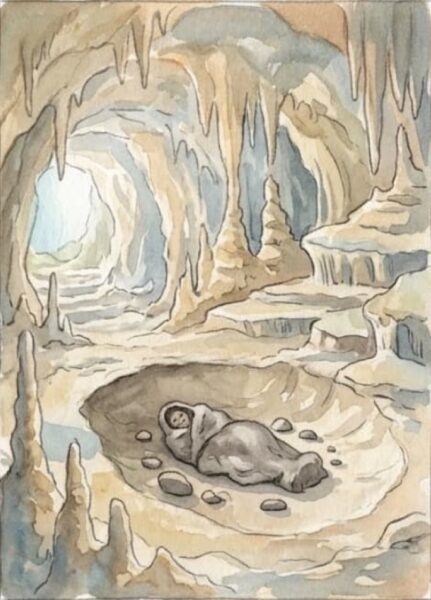
Shanidar Cave, situated on Bradost Mountain in the Erbil Governorate of Iraqi Kurdistan, yielded the remains of at least ten Neanderthal individuals dated to between approximately 70,000 and 45,000 years ago. These were not random scatterings of bone. Several individuals were found clustered together in what researchers describe as a unique assemblage — articulated skeletons in deliberate positions, concentrated in one area of the cave. The skeleton designated Shanidar 4, the one associated with the pollen, was an adult male aged approximately 30 to 45 years.
The pollen clumps were found in soil samples directly associated with the burial, not distributed randomly throughout the cave sediment. The plant species identified — including yarrow, cornflower, bachelor’s button, St. Barnaby’s thistle, ragwort, grape hyacinth, horsetail, and hollyhock — have traditionally been used for medicinal purposes: as diuretics, stimulants, astringents, and anti-inflammatories. This led to the suggestion that the individual may have been not only buried with flowers but possibly laid to rest by someone with knowledge of healing plants.
Why Is the Flower Burial Debated?
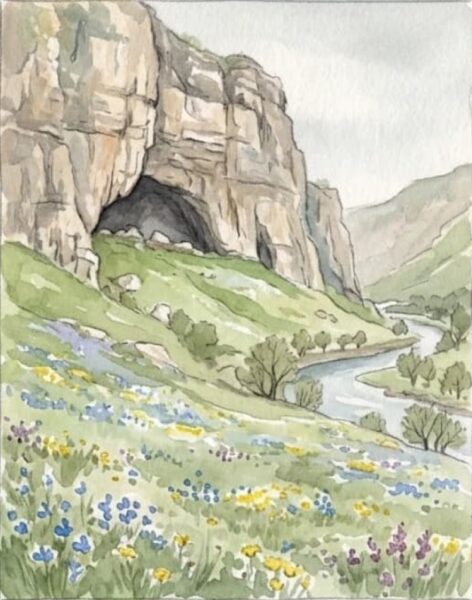
The romantic interpretation did not survive long without challenge. Critics raised several objections that have intensified over the decades. The most significant came from a 2023 reappraisal published in the Journal of Archaeological Science, which presented a compelling alternative explanation: burrowing bees.
The argument is straightforward. Solitary ground-nesting bees, still active in the cave today, excavate burrows up to half a meter deep and deposit collected pollen within them. The mixed clumps of pollen found near Shanidar 4 are more consistent with bee activity than with a single flower-gathering event, for a critical reason: the plant species represented bloom at different times of year. Under modern conditions, these flowers could not have been collected simultaneously in any single season. This rules out the scenario of someone gathering an armful of fresh flowers at the time of death.
The lead researcher on the reappraisal favors an alternative possibility: that Neanderthals may have placed branches or vegetation over the bodies, possibly including thorny species like yellow star-thistle as protection against scavengers. But the evidence remains, in his own words, “pretty equivocal.”
If Not Flowers, Then What? The Broader Evidence for Neanderthal Burial
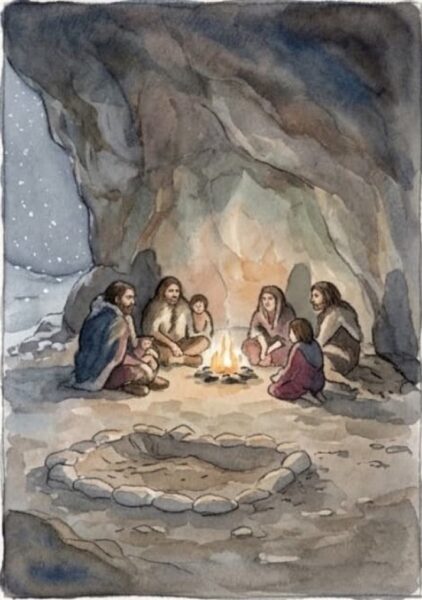
Here is what matters: the flower question, fascinating as it is, has obscured the more significant finding. Whether or not blooms were deliberately placed, the clustered arrangement of multiple Neanderthal bodies at Shanidar — positioned in one part of the cave over what may have been centuries — constitutes strong evidence for deliberate, repeated body placement.
In 2020, a new skeleton designated Shanidar Z was discovered near the original burial cluster. This individual, possibly in their forties or fifties, was found reclining on their back with one hand tucked under the head. The remains were embedded in sediment that showed no evidence of natural depositional processes — no sorting, no bedding structures, no water-flow indicators — implying a singular, rapid deposition event consistent with intentional burial. Plant tissue fragments were also found within the body cavity fill, and analysis is ongoing.
A prominent rock next to the head of Shanidar Z may have served as a marker, suggesting that Neanderthals returned to this specific location within the cave to deposit their dead over extended periods. If confirmed, this would represent a site of repeated mortuary practice — what some researchers have called a “site of memory.”
What Other Sites Tell Us About Neanderthal Mortuary Behavior
Shanidar is not alone. Across Europe and the Levant, approximately 40 possible Neanderthal burial cases have been reported, though many remain contested. The strongest cases include:
La Chapelle-aux-Saints, France (approximately 50,000–60,000 years ago): A nearly complete skeleton was found in a pit dug into the cave floor. New excavations beginning in 2011 confirmed the pit was anthropogenic — not a natural depression — and that the skeleton’s preservation was consistent with rapid, intentional burial. Several additional shallow cavities were explored in the same cliff, containing Mousterian artifacts.
La Ferrassie, France (approximately 41,000–45,000 years ago): Seven Neanderthal individuals were found at this rock shelter, including adults and young children. A 2020 multidisciplinary study of La Ferrassie 8, a two-year-old child, demonstrated that a pit had been dug into a sterile sediment layer and the child’s body deliberately placed within it. The positioning of the body — head slightly elevated — is unlikely to have occurred naturally, and the preservation of the fragile juvenile bones exceeds what would be expected without protected burial.
Kebara Cave, Israel (approximately 60,000–61,000 years ago): A nearly complete male Neanderthal skeleton was found in a central position within the cave. The excellent preservation, lack of scavenger tooth marks (unlike surrounding fauna), and the curious absence of the skull — apparently removed after soft tissue decomposed, with an upper tooth still in place near the jaw — all suggest intentional burial followed by secondary skull removal.
A 2024 comparative study of burial sites across the Levant found that both Homo sapiens and Neanderthals buried their dead regardless of sex or age, though Neanderthal infant burials were proportionally more common. Intriguingly, neither species appears to have practiced burial before entering the Levant, where their ranges overlapped — raising the possibility that burial was innovated in a context of demographic pressure and interspecies proximity.
What This Suggests About Neanderthal Intelligence
Deliberate burial implies several cognitive capacities: spatial awareness of a place suitable for interment, planning of the physical act of digging, and — most provocatively — some relationship to the dead body that extends beyond practical disposal. Whether this represents symbolic thought, emotional attachment, hygiene concerns, or scavenger management remains impossible to determine from physical evidence alone.
What can be said is that repeated use of the same location for body placement — as seen at Shanidar and possibly La Ferrassie — suggests place-based memory and the transmission of that memory across time. A group that returns to the same spot in a cave to deposit its dead is a group with a concept of continuity.
Living with the Land and the Dead: A Note on Prehistoric Ecology
Neanderthal burial sites are almost always caves or rock shelters — the same places used for habitation. The dead were placed among the living, within the landscape that sustained both. This is a profoundly different relationship to death and place than modern Western practice, which separates the dead into designated spaces away from daily life. Neanderthals, by contrast, appear to have integrated their dead into the fabric of their occupied landscape, treating certain caves as multi-generational sites of both residence and remembrance. The ecological implication is subtle but important: these were people whose sense of place was deep enough to encompass both the living and the dead within the same valued terrain.
What This Means Today
In a world where ancient burial sites are routinely bulldozed for development, the Neanderthal evidence serves as a quiet reminder that the impulse to mark where someone has been laid to rest may be far older than our species. Respecting ancient landscapes — whether they contain the remains of Neanderthals, early Homo sapiens, or later peoples — is not merely a matter of cultural heritage law. It is an acknowledgment of a behavior so deep in our shared evolutionary lineage that it predates everything we think of as civilization.
Try This: Visit a local cemetery, burial mound, or ancient site near you. Observe its relationship to the surrounding landscape. Notice whether it occupies elevated ground, sheltered ground, or a place with a distinctive view. Then consider: what might have made this place feel significant enough to mark with the dead?
Lesser-Known Facts
The pollen species found near Shanidar 4 bloom at different times of year — a detail that undermines the idea of a single flower-gathering event but was not widely discussed until 2023, more than fifty years after the original excavation.
At Kebara Cave, the skull of the buried Neanderthal appears to have been deliberately removed after decomposition. An upper tooth was still in anatomical position near the jaw, suggesting the skull was intact when the body was first placed. This hints at a possible secondary mortuary practice — the manipulation of remains after initial burial.
A 2024 study found that both Neanderthals and Homo sapiens may have innovated burial independently in the Levant, possibly driven by increased population density in a region where the two species coexisted.
The Gorham’s Cave Complex in Gibraltar, a UNESCO World Heritage Site, preserves over 100,000 years of Neanderthal occupation — but no confirmed Neanderthal burials. Burial was not universal. Regional variation in mortuary practices is a key feature of the archaeological record.
Myth vs. Evidence
Misconception: The Shanidar “flower burial” proves Neanderthals had funerals with elaborate rituals.
Evidence: The pollen clumps near Shanidar 4 are now more plausibly attributed to burrowing bee activity. However, the deliberate placement of multiple bodies in one area of the cave — including the newly discovered Shanidar Z — provides strong independent evidence that Neanderthals repeatedly and intentionally interred their dead at this site.
What We Still Don’t Know
We do not know whether Neanderthal burial carried symbolic meaning or was purely practical. We cannot determine whether they experienced grief in a way we would recognize. The question of whether vegetation was deliberately placed with the dead — branches, thorny plants, or otherwise — remains open and under active investigation. Whether burial practices were culturally transmitted between generations, or independently reinvented by different groups, is unknown. And the relationship between Neanderthal and early Homo sapiens burial practices — whether one influenced the other, or both arose from shared cognitive capacities inherited from a common ancestor — remains one of the most fascinating open questions in the study of Neanderthal coexistence with Homo sapiens.
