There are thousands of books set in the Stone Age. Most lists just dump them in a pile. This guide organises them the way archaeologists organise time — by era, by theme, and by what kind of reader you are. Whether you want Ice Age survival, Neanderthal encounter, the first farmers, or women who held knowledge before writing existed — you’ll find your next read here.
Note: This guide includes titles from across the genre, including one published by this site’s author.
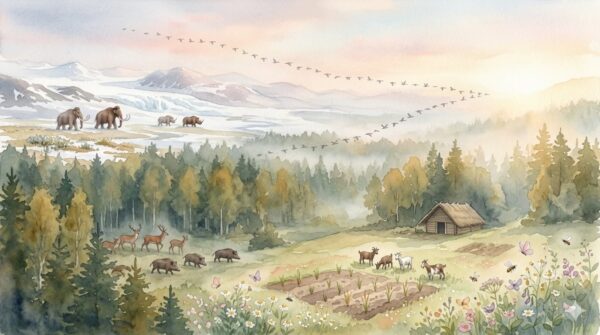
Start Here — What Kind of Prehistoric Reader Are You?
Prehistoric fiction spans hundreds of thousands of years and several human species. Before diving into the list, pick the experience you’re looking for:
- I want Ice Age Europe — mammoths, cave paintings, the full Pleistocene: Go to Paleolithic Fiction
- I want Neanderthals — their intelligence, their world, their encounter with us: Go to Neanderthal Fiction
- I want women protagonists — healers, shamans, survivors: Go to Female-Led Fiction
- I want the first farmers — megaliths, early villages, the birth of civilization: Go to Neolithic and Copper Age Fiction
- I want archaeologically grounded fiction — no magic, no myth, just the evidence: Go to Archaeology-Forward Fiction
- I’m looking for younger readers or classroom reading: Go to YA and Children’s
Or scroll through the full guide below.
The Badge System
Every book in this guide carries one or more of these markers so you know what you’re getting before you start:
🏺 Archaeology-forward — author has research credentials or the work is widely praised for scientific grounding
🌀 Speculative / shamanic — imaginative prehistory with spirits, visions, or mythologised elements
👩 Female protagonist — woman at the centre of the story
🦴 Neanderthal / hominin focus — Neanderthals or other hominins are central
📚 Series — part of a longer sequence
🌍 Non-European setting — Americas, Africa, Asia, or Arctic
Paleolithic and Ice Age Europe
The deep Ice Age — roughly 300,000 to 10,000 BCE. Mammoths, cave lions, and the humans who painted them. The era most people picture when they think “prehistoric fiction.”
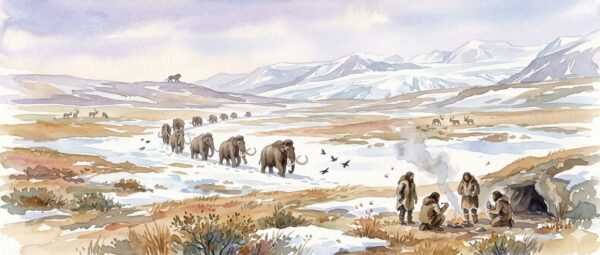
Earth’s Children Series — Jean M. Auel
🏺 👩 📚 | Starting with The Clan of the Cave Bear (1980), this is the series that defined the genre for millions of readers. Auel spent years researching Ice Age Europe and it shows — the botanical knowledge, the tool-making, the social structures are informed by real archaeology. Ayla is one of the most compelling protagonists in historical fiction: a Cro-Magnon woman raised by Neanderthals, navigating two worlds simultaneously. The series spans six volumes and takes the reader from Ice Age France to the cave paintings of Lascaux. The first book remains the strongest entry point and one of the most widely read pieces of prehistoric fiction ever published.
Start with: The Clan of the Cave Bear (1980)
Dance of the Tiger — Björn Kurtén
🏺 🦴 | Written by a Finnish palaeontologist, this is one of the most scientifically grounded prehistoric novels ever published. Kurtén coined the term “paleofiction” and this book — set during the Neanderthal-Cro-Magnon encounter in Ice Age Scandinavia — remains a benchmark for archaeological authenticity. Spare, precise, and quietly moving.
The Quest for Fire — J.-H. Rosny aîné
🌀 | One of the earliest prehistoric adventure novels, first published in 1911 and still compelling. A band of early humans sets out to recover fire after their flame is extinguished. A foundational text of the genre — among the first works to demonstrate that prehistoric people could carry a novel.
Shaman — Kim Stanley Robinson
🏺 | Robinson spent years researching the Chauvet Cave paintings and this novel — set 32,000 years ago in Ice Age Europe — is the result. A young shaman-in-training navigates a winter journey. Beautifully written, carefully researched, and one of the most immersive prehistoric novels of the modern era.
Reindeer Moon — Elizabeth Marshall Thomas
🏺 👩 🌍 | Written by an anthropologist with decades of fieldwork, this Siberian Ice Age novel follows a young woman navigating survival, love, and loss. The anthropological grounding is exceptional. Often overlooked in favour of Auel but deserves equal attention.
The Inheritors — William Golding
🏺 🦴 | Nobel laureate Golding’s extraordinary novel told from a Neanderthal point of view — written before current research began reshaping views of Neanderthal intelligence. The cognitive difference between Neanderthal and Sapiens perception is rendered through prose structure itself. A literary achievement as much as a prehistoric novel.
Neanderthal Fiction
Neanderthals lived in Europe and western Asia for over 300,000 years. They made tools, buried their dead, cared for their sick, and created symbolic art. Modern fiction is beginning to reflect what the archaeology actually shows.
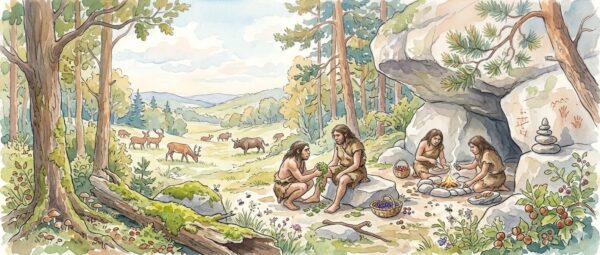
The Last Neanderthal — Claire Cameron
🏺 👩 🦴 | A dual-timeline novel alternating between a Neanderthal woman in 40,000 BCE and a modern archaeologist making a discovery that connects them. The Neanderthal sections are vivid and ecologically precise — Cameron’s portrayal of a species fully adapted to its world is one of the most considered in recent fiction.
Hominids — Robert J. Sawyer
🌀 🦴 📚 | A parallel-Earth science fiction premise — a world where Neanderthals survived and became the dominant species. More speculative than archaeological, but the Neanderthal civilisation Sawyer constructs is thoughtful and draws on real paleoanthropology. Gateway fiction for readers who come from science fiction rather than historical fiction.
Dance of the Tiger — Björn Kurtén
See Paleolithic section above. The definitive literary Neanderthal encounter novel.
Female-Led Prehistoric Fiction
The healer, the gatherer, the keeper of knowledge. Women have been central to prehistoric fiction since Auel — but the genre is expanding beyond one template. These books put women at the heart of survival, medicine, and social life in ways informed by what the archaeology suggests.
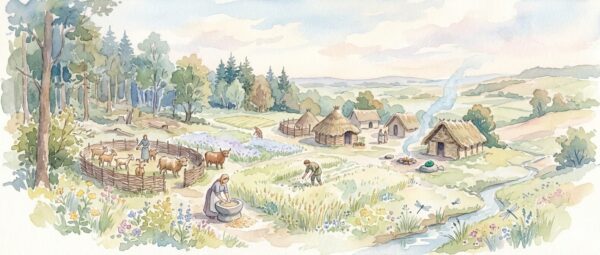
When Women Held the Fire — Zavesti
🏺 👩 📚 | Seven women healers across four thousand years in prehistoric Central Europe — from 6000 BCE, when glaciers were still retreating, to 2600 BCE, when the first stone circles were being raised. Each story stands alone, each features a different healer facing a different crisis: glacial melt poisoning rivers, copper smelting producing toxic fumes, volcanic ash burying the valley, early agriculture breeding new diseases. The crises are drawn from interpretations of the archaeological record — no magic, no mythology, just women with botanical knowledge, ecological intelligence, and the courage to act. One of the more archaeology-focused recent entries in the genre, and particularly strong for readers interested in prehistoric plant medicine and women’s daily lives.
The Clan of the Cave Bear — Jean M. Auel
🏺 👩 🦴 📚 | Ayla remains the template for the female prehistoric protagonist — a Cro-Magnon woman of extraordinary intelligence and botanical knowledge living among Neanderthals. The healer arc, the resistance against patriarchal authority, the detailed portrayal of plant medicine — these elements have influenced every female-led prehistoric novel written since 1980.
Mother Earth, Father Sky — Sue Harrison
🏺 👩 🌍 📚 | Set in prehistoric Alaska among the ancestors of the Aleut people, this is a survival epic built around a young woman navigating extraordinary hardship with resilience and intelligence. Harrison’s research into Arctic prehistory is meticulous. A major series that deserves more readers than it has.
The Last Neanderthal — Claire Cameron
See Neanderthal section above.
Reindeer Moon — Elizabeth Marshall Thomas
See Paleolithic section above.
Archaeology-Forward Fiction
For readers who want the drama to come from the land, the body, and the actual challenges of prehistoric survival — not from magic systems or invented mythology. These books stay close to what current evidence and informed inference allow.
When Women Held the Fire — Zavesti
🏺 👩 | See Female-Led section above. Each crisis is drawn from documented geological and archaeological events; each plant remedy is informed by current archaeological and ethnobotanical evidence where it exists, and extended through careful inference where it does not.
Dance of the Tiger — Björn Kurtén
🏺 🦴 | Written by a working palaeontologist. A benchmark for archaeological grounding in Neanderthal fiction.
Shaman — Kim Stanley Robinson
🏺 | Years of research into Chauvet Cave and Ice Age Europe. One of the most carefully constructed prehistoric novels of the modern era.
People of the Wolf — W. Michael Gear and Kathleen O’Neal Gear
🏺 🌍 📚 | Both authors are archaeologists by training. Their North America’s Forgotten Past series — over 20 volumes — covers prehistoric North America from the peopling of the continent through the complex cultures of the late pre-contact era. Exceptional archaeological grounding throughout.
The Gathering Night — Margaret Elphinstone
🏺 | Set in the Mesolithic — one of the most underserved periods in prehistoric fiction. Elphinstone’s portrayal of a hunter-gatherer community on the Atlantic coast of prehistoric Scotland is quiet, precise, and deeply human. Essential reading for anyone who wants the Mesolithic rather than the more commonly depicted Ice Age or Neolithic.
Mesolithic, Neolithic, and Copper Age Fiction
The often-overlooked middle chapters of prehistoric time — the retreating ice, the first farmers, the invention of copper, the raising of megaliths. Roughly 10,000 BCE to 2,000 BCE.
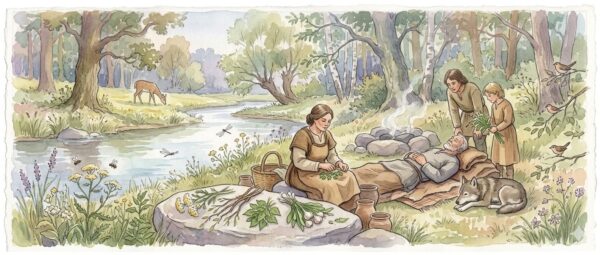
When Women Held the Fire — Zavesti
🏺 👩 📚 | Spans the full range — from late Mesolithic through the Copper Age and into the Megalithic period. One of the few recent works to cover this sweep in a single volume, using one valley as the constant and seven women as the through-line across four thousand years.
Circle of Days — Ken Follett
🌀 👩 | Ken Follett’s 2025 Neolithic epic — set around 2500 BCE on the Great Plain of England during the construction of Stonehenge. A large-cast saga following flint miners, herders, farmers, and priestesses as they navigate inter-tribal conflict and the monumental ambition of building in stone. Follett worked with archaeologist Mike Pitts as a consultant. An accessible entry point for readers new to the Neolithic period, written in the epic Follett tradition.
The Gathering Night — Margaret Elphinstone
🏺 | Mesolithic Atlantic Scotland. See Archaeology-Forward section above.
Pillar of the Sky — Cecelia Holland
🌀 | Set during the construction of a Stonehenge-like monument. Holland brings genuine dramatic tension to the Neolithic world of monument-builders and competing clans.
Non-European Prehistoric Fiction
Prehistoric fiction has long been dominated by Ice Age Europe. These books expand the map significantly.
People of the Wolf — W. Michael Gear and Kathleen O’Neal Gear
🏺 🌍 📚 | The peopling of the Americas from Asia. Archaeologist authors, exceptional research, a decades-long series. Start here for North American prehistoric fiction.
Mother Earth, Father Sky — Sue Harrison
🏺 👩 🌍 📚 | Prehistoric Alaska. See Female-Led section above.
Reindeer Moon — Elizabeth Marshall Thomas
🏺 👩 🌍 | Siberian Ice Age. See Paleolithic section above.
Young Adult and Children’s Prehistoric Fiction
The Stone Age is core curriculum in many schools, and the YA market for prehistoric fiction is substantial. These books introduce younger readers to the genre — and many adult readers have found their lifelong obsession with prehistory through titles in this section.
Wolf Brother — Michelle Paver
🏺 📚 | Set 6,000 years ago in a northern European forest world, this is one of the finest pieces of Mesolithic fiction for any age. Torak, a young boy, and his wolf companion navigate a world of forests, rivers, and clans in language so precise and ecologically rich that many adult readers rate it alongside adult prehistoric fiction. The Chronicles of Ancient Darkness series runs six volumes. Paver’s research into Mesolithic forest ecology is exceptional.
Start with: Wolf Brother (2004)
Ivory and Bone — Julie Eshbaugh
👩 📚 | YA prehistoric fiction with a female lead, drawing on Ice Age settings and inter-clan conflict. Accessible and well-paced for teenage readers discovering the genre.
Ug: Boy Genius of the Stone Age — Raymond Briggs
📚 | For younger children — a gentle, funny picture book introduction to Stone Age daily life that avoids the “caveman” clichés. Useful for classroom contexts.
Hidden Gems Worth Finding
These titles appear less often in mainstream lists but deserve significantly more readers.
The Reindeer People — Megan Lindholm
👩 🌍 | Arctic tundra survival, female protagonist, consistently described by readers as “gritty and realistic.” Frequently recommended in underground prehistoric fiction communities but rarely appears on mainstream lists.
The Animal Wife — Elizabeth Marshall Thomas
🏺 🌍 | Thomas’s follow-up to Reindeer Moon, set in the same Siberian Ice Age world. Quieter than the first book but equally precise in its anthropological grounding.
Dance of the Tiger — Björn Kurtén
Already listed above — included here because it remains one of the most overlooked prehistoric novels despite being written by a leading palaeontologist.
Go Deeper — YouTube and Podcasts
Prehistoric fiction readers are typically people who want to understand the real world behind the stories. These channels and podcasts provide the visual and audio grounding that turns a good novel into a full experience.
YouTube Channels
PBS Eons — The largest and most accessible prehistory channel on YouTube, covering human evolution, Ice Age megafauna, and the deep timeline of life on Earth. Essential companion to any prehistoric fiction reading. Particularly useful for understanding the Neanderthal-Sapiens relationship and the pace of environmental change across the Stone Age.
Miniminuteman — Archaeology and archaeo-debunking with genuine depth. Particularly strong on Neolithic monuments, European prehistory, and separating what the evidence actually shows from popular mythology. One of the most useful channels for readers who want to fact-check their fiction.
Ancient Archives — Long-form ancient history content with strong coverage of prehistoric Europe and the Near East. Good for understanding the Neolithic revolution and the emergence of the first complex societies that prehistoric fiction often culminates in.
Podcasts
The Prehistory Guys — The most directly relevant podcast for prehistoric fiction readers. News, discussion, and deep dives from the world of prehistoric archaeology. Available on Podbean and Apple Podcasts.
Tides of History — A weekly history podcast that periodically runs deep-time and prehistory arcs. The episode on ancient DNA and what it’s changing about our understanding of the Ice Age is particularly valuable for fiction readers who want current science.
Archaeology Podcast Network — A network hosting multiple archaeology shows, ranging from accessible public archaeology to academic discussions. Good for finding niche content about specific periods or regions.
ArchaeoEd — Archaeology education podcast, monthly releases, consistently accessible for non-specialist listeners. Strong on methodology — how archaeologists actually know what they know.
Where the Community Gathers
Prehistoric fiction readers are a committed community. These are the places where they discuss, recommend, and debate.
Reddit r/HistoricalFiction — The primary Reddit community for adult prehistoric fiction. Search for “Stone Age” or “Clan of the Cave Bear” to find active threads. A major source of word-of-mouth recommendation for the genre.
Reddit r/suggestmeabook — “Books like Clan of the Cave Bear” is one of the most common requests in this community. Active, well-moderated, and genuinely useful for discovery.
Goodreads — Prehistoric & Ancient History Fiction group — A dedicated niche community that has developed its own classification systems for the genre. Active discussion threads and detailed reading lists.
Goodreads — Historical Fictionistas — Larger group with active prehistoric themed threads. Good for connecting with readers who span multiple historical periods but have a strong prehistoric interest.
Risingshadow Paleofiction List — The most comprehensive database of paleofiction titles online, listing over 77 books. Useful as a discovery tool for titles that don’t appear on mainstream lists.
Frequently Asked Questions
What’s the best book to start with if I’ve never read prehistoric fiction?
The Clan of the Cave Bear by Jean M. Auel is the genre’s gateway book for a reason — it’s immersive, detailed, and built around one of historical fiction’s most compelling protagonists. If you want something more recent and tightly paced, When Women Held the Fire offers seven self-contained stories you can read individually before committing to a longer series.
Are there prehistoric fiction books without sexual violence?
Yes. When Women Held the Fire, Wolf Brother, Shaman, The Gathering Night, and Dance of the Tiger are all free of this content. The issue is most commonly associated with later volumes of the Earth’s Children series, which some readers find shifts in tone from the first book.
What’s the best Neanderthal novel?
For literary quality: The Inheritors by William Golding. For scientific grounding: Dance of the Tiger by Björn Kurtén. For modern narrative accessibility: The Last Neanderthal by Claire Cameron.
Is there prehistoric fiction set outside Europe?
Yes — and this is one of the genre’s growth areas. Sue Harrison’s series is set in prehistoric Alaska. The Gear series covers North American prehistory across over 20 volumes. Elizabeth Marshall Thomas’s novels are set in Siberia. The European dominance of the genre reflects publishing patterns more than reader interest.
What does “archaeologically accurate” actually mean for a prehistoric novel?
It means the author has grounded their world in what the archaeological record currently suggests — the tools, the plants, the ecological conditions, the evidence for social organisation and healing. It doesn’t mean every detail is confirmed — the Stone Age has enormous gaps in the record. The honest version of accuracy is a novel that distinguishes between what the evidence shows and where the author is filling in the gaps with informed inference. The best archaeology-forward fiction makes this distinction visible.
Are there prehistoric fiction books about the first farmers?
This is one of the most underserved periods in the genre. When Women Held the Fire covers the Neolithic farming transition directly — the copper age, the first grain diseases, the emergence of trade routes. Circle of Days by Ken Follett (2025) covers the late Neolithic Stonehenge period. Both are among the few adult novels to engage seriously with this era.
A Note on This Site
This guide is written by a researcher and writer focused on prehistoric life, archaeology-informed fiction, and early human societies.
Zavesti.com is an archaeology blog that reconstructs prehistoric life by cross-referencing multiple lines of evidence — dental calculus analysis, site surveys, ethnobotanical records, tool wear patterns — and following where they converge. The posts here cover Stone Age herbal medicine, Neanderthal technology, prehistoric site selection, and the deep history of women’s knowledge before writing existed.
The fiction on this site — including When Women Held the Fire — is built on the same research. Every plant remedy is informed by current archaeological evidence. Every ecological crisis is drawn from the geological and archaeological record. The stories are imagined, but the world they inhabit is grounded in what the evidence currently supports.
If you’ve found your way here through prehistoric fiction and want to go deeper into the actual archaeology — start here.
This guide is updated as new titles are published and new research emerges. There are additional resources on Wikipedia. If you know a title that belongs here, the contact page is open.
